Linkedin University Pages: Simplifying Education as Vocation?

Image

By now, we’ve all heard about Linkedin adding University pages. As we all scramble to request our upgraded company profiles, read what others are doing to implement this and head off requests from departments about what this means for all of us, we’ve yet to discuss what this means for higher education and it’s perception. Especially among younger generations of college going students. Is positioning higher education search so closely tied with careers a detriment to the idea of education for civic engagement and critical thinking’s sake?

A first look at the ‘in progress’ pages of the upgrade place heavy emphasis on searching for alumni and students based on class year, place of employment and career. No mention of degrees or courses of study on the opening page. Hopefully there will be a way to show what degrees lead to what careers or vice versa. But for now, being that it is Linkedin, careers are the primary focus.

As liberal arts colleges struggle to prove that critical thinking skills are key in a changing economy, outcomes for career readiness and job placement – for better or for worse – are highly prioritized in the media. Will institutions that focus on turning out the best website builder make the most of Linkedin and leave the idea of learning for the skill of being agile and ready for any career fall behind? Aren’t we putting emphasis on the wrong thing here?

Many questions remain as to how this ‘upgrade’ will pan out: will social media savvy middle schoolers even be interested in a career based platform? Will the new alumni search by class year and career bypass many college’s own alumni directories and chances to connect alumni to a career center or other programs? How much of this will be based on selling new features and ad space to really gain traction? Will promoting the university page to a younger crowd fight the already solidified alumni base? How will this compete with our Linkedin communities? Many questions, few answers. Time, implementation and strategy is needed before we can find any. The most important thing to remember is that this is another tool at our disposal. We need to understand the audiences already in play, not only for our brand, now, university page, but also our community groups.

For now it appears to be one more place that social media managers will need to be updating but for a varied audience with very different expectations.

How do you feel about the upgrade? How will you manage it for the different audiences? How will it differ from Facebook?

Elements of a Great (Institutional) Social Media Strategy

You see it every day: an institution asks its audience via social media to participate in a contest, provide content or in some way promote their name by sharing posts with their expanded networks. These campaigns help solidify that we are players in the social media conversations that we are repeatedly told are ever so important. But what are we doing at the highest level to tie all of these one-offs together and really strengthen the idea of our brand in the minds of our consumers? How many of us have a strong institutional level social media strategy and what does that even mean?

Below are ways I discussed how Hamilton College tackled this issue in my presentation last week at EduWeb in Boston.

Research

Like all tactics, social does not stand alone. And like all good marketing and communication strategies, we begin with research.

There are several basic questions that we need to answer before we even begin to consider specific tactics or platforms.

  • What is the problem we are trying to address?
  • Who is our audience?
  • What are we trying to communicate?
  • What does success look like?
  • How do they currently engage with us? Do we know their preferences?
  • How else have we/do we currently communicate this information?
  • What is our call to action for the user?
  • Who is our competition? How do they address this?
  • What novel ways do other institutions or businesses deal with these issues?
  • Are there new tools at our disposal?
  • How can we be more creative while reinforcing the brand feeling?

Buy In

To get anything done, we know stakeholder buy in is important. But to do social media well, it’s even more so. We need to be sure that everyone understands how to make your own website as well as individual departments and their content areas. How will it support other projects?

Working from the top down and the bottom up will also allow us to meet people where they are in their understanding of the institutional brand and strategic social media use.

Ability To Implement

Having buy in is one thing, but the ability to actually implement your social media strategy is something different but also important.

You may be a social media department of one, or have a student who works with you part time, but somehow or another the work on your docket needs to get done. As much as we would love to have an animated gif of the day, we need to be realistic about what we can commit to accomplishing over the life of the strategy.

The culture and organization of your institution also plays a role in this. If your office does not control the main brand message or the channel of social media, it will be much harder for you to elevate your ideas and make the case as to why you should be the one steering the plan.

As always, any technical issues need to be addressed. Do you need a lot of web service’s time? A person on your design team? An external consultant? Be sure to know how much work you’re getting into before you commit.

Branding (Not Campaign) Focused

Campaigns mean a lot of things in higher ed. Capital campaigns. Admission campaigns. Social Media Campaigns, etc. But all of these fall under the larger umbrella of ‘branding’. Everything we do should support the brand idea. If we do not know what that idea is, then we need to back up.

Campaigns do have their place, but the institutional level strategy seeks to blend everything together in an even mix. No one voice should outshine another. Social media strategy should be a part of a larger whole, that supports the main brand idea, business goals and outcomes through content.

Authentic

Audiences are more likely to trust reviews and outcomes from their peers rather than from the institution which obviously is selling itself. So making sure authentic content – content from our audiences – is a part of our strategy is crucial.

Stay away from gimmicks whenever possible. No follower baiting, like boosting, etc. This takes away from the idea that you are building a community of engaged people vs people to push marketing messages to. This doesn’t mean that we don’t publicize our accounts for others to follow or ask for them to share our content only that we respect the channel for the social activity that it was meant to foster.

We want to encourage others to play in our spaces, so we want as little barrier to entry as possible. This means promoting other institutional accounts that may be valuable to our audience members, even if they aren’t our own, as well as promoting content from our audiences. Student, community and alumni run accounts with great content are extremely valuable even if they are not internally managed. This also means having a clear set of guidelines as to how and when we use social media, who to go to for help/permission and expectations of how we will act.

There is a place for the good and the bad. If we sanitize our social media presences too much, we end up using them as another controlled marketing channel and risk losing the trust of our audience. Once lost it cannot be easily recovered.

There is also the issue of timeliness. We want to be sure we are taking part in conversations at the best time, during certain events or promoting content that is culturally or socially relevant at the right time. Not doing so also negates the trust we’ve built by portraying us as using the channel as one way only promotion. Being timely is building a type of currency in social media: it’s a benefit to our audience.

Integrated

More often than not, education is needed to ensure that our colleagues see social media as part of an overall integrated strategy, not a stand alone. It should enhance all that we do, and if done well, will change the way we communicate influencing all other channels.

We know how important it is to publicize the existence and benefit of our social media channels, but even more important is their integration into all that we do as a team and as an institution. We cannot ask our communities to think or act this way if we do not do so ourselves.

How do we ensure that our social media strategy is integrated?

  • We make sure that they are easy to find: on our website, in our emails on print pieces.
  • We find a way to use social in meaningful ways to enhance experiences either in real life or on the web.
  • We share the ways we coordinate our conversations via a list of hashtags, accounts.
  • We incorporate social media into news stories on our site wherever possible via comments, sharing or hashtags.

Collaborative

In order to remain relevant, we need to ensure that our social media strategy includes regular feedback and crowd sourced ideas. Since this is a two way communication platform, incorporating ideas from our audience help to make our strategy stronger and authentic.

Because we are basically sharing the creation of brand focused content, we want ideas from our audience on how best to do that in fun, tangible and effective ways.

We also need to remember to continue educating both our internal stakeholders as well as our audiences on how to use these media to best connect with each other and the institution.

Keeping a low barrier to entry is also important. When we spend a lot of time policing accounts and trying to enforce a social media policy that is at best a set of guidelines, then we end up alienating those who could have gone on to do great things. We definitely need to let our community know what is expected of them should they choose to communicate via social media, but we can do this in a way that is less obstructive than a stringent ‘policy’.

Measured

Last but certainly not least is measurement. If we don’t know where we are coming from we wont know if we’ve reached out goal. Often we don’t think of this until it’s too late, especially in social media.

Through our research in the beginning, we should have identified areas that we’d like to improve. We can set our baseline from there.

We need to be careful not to confuse vanity metrics (likes, followers, etc) with actual outcomes. We need to move the needle somehow.

Some ways we may do this for the brand are:

  • Increase in positive sentiment
  • Increased visibility
  • Increased communication through social channels
  • Helping others complete their goals (donations, enrollment, event participation)

These will be different for everyone depending on your brand strengths and weaknesses.

 Let’s Work Together
Surprise! You’re actually a brand manager!

Image

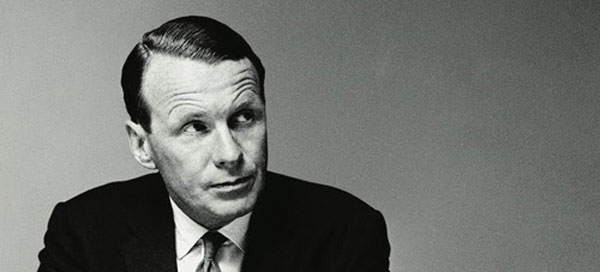
Coming out of an existential funk, I’m finally reading the books I’ve accumulated over the past few months but havent had the passion to pick up. It’s no mistake that two of these are by David Ogilvy.

No, I’m not an advertiser, although I’ve often dreamed of working at an ad agency (pre-Mad Men craze). But, I am an integrated marketer, so I know that advertising, marketing and public relations all need to work together. These days though, the lines are blurred on which is which. Understanding the mind of an ad man only helps to push you that much further – especially when his decisions are based entirely on what works, not what’s pretty or makes the client/agency ‘feel good’.

In beginning Ogilvy on Advertising last night I stumbled upon this gem:

“every advertisement must contribute to the brand image”

He goes on to state that the brand image is the brand personality. In all of our work with social media we often discuss tone, voice and even personality. But how many of us see ourselves as brand managers?

Too many times social media is seen as a sales tactic: something to drive traffic and generate leads. For those who measure, these are what they point to as their outcomes. You hear much less about brand and brand personality, changing sentiment and perception over time. Are these less important because they do not sound tangible or businessey enough?

The thing is, we can measure sentiment and perception, as well as how it contributes to ‘sales’. But it takes a lot more effort and there is no one perfect equation that creates success for everyone across the board. It comes down to one thing and one thing only: do the work. Only you can determine what baselines are for your organization and how you need to affect them in order to meet organizational goals. No one can tell you how to do this, they can only tell you what has worked for them. It may not work for you. One size does not fit all.

The mediums may have changed since Ogilvy’s time but the principles have not: do the research, dont go by your gut alone and if it’s still selling dont trash it until its not.

Commencement Text to Screen 2013

suffolkpost

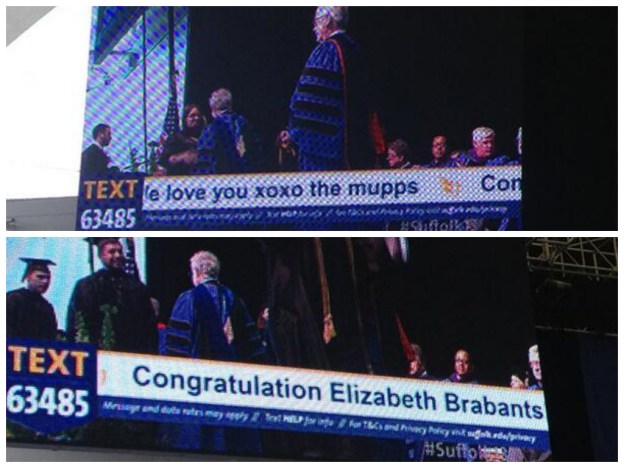
Back again, this time, as a consultant! Due to last year’s resounding success, Suffolk University’s commencement elected to once again include the interactivity of text to screen. During the procession of graduates only, a lower third appeared on the two large screens flanking the stage instructing the audience on how to text a message of congratulations.

While the home page of Suffolk’s website was taken over by a variety of media, including a live tagboard installation for social media tagged #suffolk13, we wanted to ensure that everyone was able to participate in the excitement of the day, as well as the excitement of seeing your message appear on the big screen for all to see. Not everyone has a Twitter account – especially parents and grandparents. By using texts instead, we allow a much larger audience to participate.

And participate they did. This year’s numbers:
Total number of unique phones: 2,549 (up from 1,799)
Total number of texts received: 4,848 (up from 3,440)
Total number of approved messages: 2,337 (did not have these numbers last year)
Total number of unapproved messages: 2,511 (did not have these numbers last year)

As the sole person approving and denying texts to appear live, I’m fascinated that almost exactly half made the cut. The criteria I applied to decide if texts should appear were:

1 – Was it relevant to the ceremony and culture of the class? (Many funny ones and bruins scores got through on this)

2 – Was it repetitive/already approved? (Many people texted the same thing more than once as they probably hadn’t seen it go live yet)

3 – Was it undecipherable/meant to be a graphic? (Some vulgar emoticons tried to slip through)

4 – Was it vulgar? (Some texts were just meant to be shocking)

5 – Could we translate it and approve the content? (Some we were unsure of the content, and did not feel comfortable approving)

All in all, another fantastic interactive project that achieved the intended goal: to engage a captive audience and capture the excitement of the day for those in attendance as well as those abroad who wanted to send their well wishes to loved ones.

Remember Your Voice: Riffs Conjured by Dave Grohl

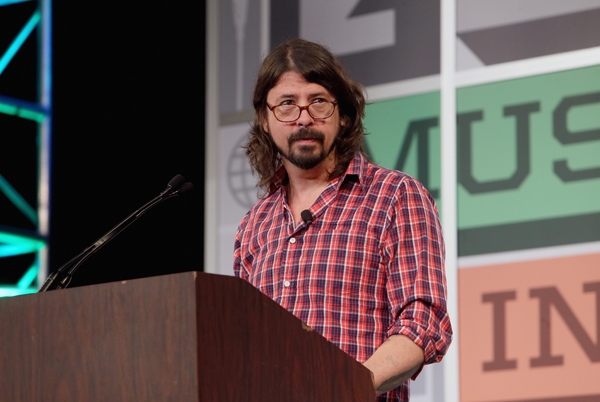
davegrohlsxswI may not be sure about how I feel about SXSW, but what I’m crystal clear on are my feelings for Dave Grohl. Even though they exist, I’m not speaking of romantic feelings, but those of respect, admiration and envy. To be someone who can harness the inner drive to create an album playing every instrument himself – not to mention the talent he exudes doing so – is something I’ve always aspired to. Being in a funk lately, this talk seemed tailor-made for me.

Until recently, I saw Grohl purely as a musician. But when I watched his SXSW keynote (and then read and reread it several times), I was shocked at how deeply it affected me on multiple levels. He spoke of how ‘the musician comes first’ and ‘finding your voice’. That at all costs, it needs to be fed, nurtured and free to grow and change. No matter how much technology changes us, there is one thing that remains the same within us. There is something that can deeply move each of us to action. The problem is that many of us deny it. We push it down. We neglect it. Some of us may not even know what our ‘thing’ is. Many of us abandon it. We condemn ourselves to mundane societal norms, tasks and checklists that do nothing for our inner world. We are not truly living.

As a musician who abandoned her ‘voice’ many years ago, this got me thinking. I had just finished reading Getting Unstuck: A Guide to Finding Your Next Career Path and concluded that my ‘thing’ was creativity. To be happy in my career, I need to be able to use creativity to solve problems and find new ways to deliver results. This makes me happy. This is what I am good at. This is what I bring to the table. But how am I using this talent to feel like I’m living up to my potential? How can I use it better to meet the needs of an organization while not sacrificing anything? How do you turn your talent (voice) into a career?

Many of us have passion for what we do. We research. We strategize. We share results and ‘cool things’ we’ve found. But sometimes we get lost in the shuffling of electronic paper (Mashable posts) and our competitive nature (Klout scores). As marketers we get lumped in with people we’ve labeled as snake charmers and ladder climbers. When we lose sight of what’s really important, pursuing creative solutions, we are not pushing our voice to its limit. We’re lip syncing someone else’s song. A song that everyone else knows the words and pitches to. And it’s boring.

“It’s YOUR VOICE. Cherish it. Respect it. Nurture it. Challenge it. Stretch it and scream until it’s fucking gone. Because everyone is blessed with at least that, and who knows how long it will last . . .”

How are you finding ways to do this in your career and in your life every day?

The Scroll – A Strategic Social Media + Brand Move

Image

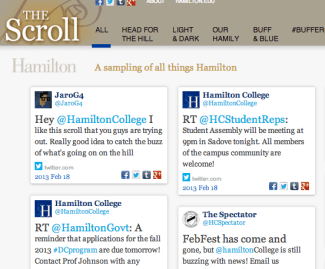
Our social media baby has finally arrived: Hamilton College’s ‘The Scroll’ is a platform born of love, research, cold sweats and lots and lots of discussion. Still in beta testing, we’re adding in the last bits of functionality but released this on campus, to alums and the broader social media community today.

Not only a fun, interactive way to find a variety of conversations at once, The Scroll was the answer to our top five questions about social media use and authentic branding of our institution:

1. Many in our audience do not use Social Media/Twitter/Facebook/Etc. Or do they?

Perhaps the issue is that our audience never really knew how to build a website? The Scroll aims to be a solution: pull together all of the valuable conversations about our institution  from a variety of platforms and audiences and allow them to be shared back out via the platform of the user’s choice. Even if you are not a social media user, like some of our older alumni, now, you can see the conversations as they happen and choose to participate or spectate as you so desire. Instead of creating a one time campaign, The Scroll can be used over and over again, highlighting daily and trending content, and adding in new accounts as they become available. It is platform agnostic, although primarily fed via Twitter (as we work out the inevitable, and ubiquitous Facebook and Tumblr kinks).

2. Departmental and community accounts fade/die.

While it may be easy to set up a Facebook or Twitter account, we all know that the difficulty lies in upkeep and maintaining your relevancy. Now, in order to be highlighted on The Scroll, accounts need to stay on top of their game to produce relevant and timely content. Competition among groups and accounts will hopefully sustain the content influx, along with targeted social media campaigns, especially those from events. Organic content trumps all, and the main content goal of The Scroll is authentic,transparent content, live from our students, alumni and community.

3. Our audience, if it does use social, doesn’t connect with us this way. Do they?

Beyond creation of accounts, we need to market them. We recently launched a companion campaign ‘Share & Engage’ to fully flesh out the reasoning behind projects like The Scroll: we invite our audience to share their thoughts, engage in a dialog with us and to push around and create content that is relevant to their individual Hamilton experience. By piecing these together, we create the real and total Hamiltonian experience  Other projects in this include our social media directory, adding comment and sharing functionality to our news stories, a newly updated and social media inclusive alumni directory and an interactive map project.

4. There isn’t that much content being shared about us. Is there?

By creating a fire-hose of social media content, funneled from campus and alumni community accounts and tags, we’re able to unearth conversations that may have previously fallen through the cracks. By showcasing this content to our communities, we allow them greater opportunities to engage in discussions, reconnect with friends & faculty  or just share funny ideas and memes. This will need to be maintained, but we’re already creating creative content campaigns where ever and whenever we can, built with alumni and student feedback. By giving ownership to our audience in many ways, we’re hoping to make this truly their platform.

5. It’s difficult to follow a conversation with multiple people, on multiple platforms in social media. 

The hope is that The Scroll brings together all of the content that we may have not seen previously. Conversations on similar topics in a variety of places can now live together and a broader picture painted. We also allow for a variety of viewpoints so that the true nature of life at Hamilton can come through. As we began to see our reliance on a platform like Storify grow, we decided to try our hand at taking on something similar in-house.

It remains to be seen how The Scroll will be accepted and used, but ultimately it was a fun, calculated risk to take. We’re hoping conversations grow because of it and that our audience feels more in touch with the place that they call, have called or will call, home.

This Pup’s For You: How The Puppy Bowl is Really Winning

ImageWhile most of America (well, not Giants or Patriots fans) are getting ready for Superbowl Sunday, a few pups are getting ready for their own major debut. The beloved Puppy Bowl takes place this Sunday, complete with a Kitty Halftime Show.

What sounds like a simple, funny alternative for those who are not football enthusiasts is so much more. Now in its ninth year, the Puppy Bowl showcases shelter pups via a partnership with a variety of shelters and care providers.

Ratings have continued to grow annually, as have tweets and the cast of animal characters. Social media has become an increasing factor, with the creation of a Facebook page (currently at 82K), a live cam (a personal fave), a growing volume of Tweets, tons of video content, and now, commentary via Twitter by a Bird.

What a fun, creative way to help dogs find homes. Its easy for these pups to capitalize on cuteness, raising awareness of the variety of sheltered dogs looking for their forever home.

How can we all capitalize on being more creative around seasonal, annual events that we may not be thinking of? In what ways can we pull at heartstrings, emotions and simple daily pleasures or routines that our brands can benefit from?

Content Campaigns Will Help Higher Ed in Graph Search

Image

It’s no secret my favorite blog recently is Social@Ogilvy. In the latest post on graph search, they explain the key to winning in this new functionality:

“Brands will need to establish relationships with their fans, and cultivate those relationships through two-way dialogue, in order to give the fans the opportunity to become ambassadors – and give the brands the chance to appear high in Graph Search results.”

Important for all brands, this is highly important for higher ed. How will and should this change the way you currently post content on your brand page? Consider the following:

How will your content be found? Who will be searching for it? What will they be searching for? How is it relevant? Considering the screenshots we’ve been shown, places, interests, and other specifics will be searchable. How are you adding content to these main ‘buckets’ in what you post? What text should accompany links and images?

How can your brand advocates share it? How will they do this and why will they want to? Are you creating campaigns around creating viral content or just plopping in content to fill up your page? Are Facebook ‘check-ins’ a factor? Every event is an opportunity for content creation and sharing and we all know we have plenty of them.

How can you involve your closest audience members? It’s no surprise that user-generated content does well, but how are you fostering and showcasing it in your main brand channels? What benefit do they have to sharing and creating content? How are they involved in the creative process and how can they be more so?

We can begin answering these questions now, as best practice. The real kicker is who will strategize all of this, and how will we measure its effectiveness?

How To Get More Followers: Be Relevant, True to Yourself

“How do I get more followers?” is something we are force-fed often via the interwebs. But, when recently contemplating the same question personally, it took some thought on my part.

Number one was the question of why more followers? What does this provide to you and how does it fit in with your social media goals? ‘To reach more people’ isn’t really a focused goal, but rather ‘reach more people who influence my job search/my community/who donate/etc’ is. For me personally, I do not want to gain followers for vanity or silly Klout score sake, but rather, to know that what I’m doing is relevant and that I’m providing something of value to the community at large. And, most of all, to find like-minded people to follow and discuss great content with.

I set out not to gain followers, but to provide content that would benefit a certain niche of people. People who shared the same interests as I do. One thing that I did was overhauled how I wrote my bio in Twitter. I became more descriptive in who I was and the content people can expect to see from me. This was a place for quirky one liners or a short professional bio, but I switched it up to showcase more of what I was about.

That was the single biggest change I could have made and one that required me to be the most honest with myself: what content do I regularly provide? What did I actually tweet? What do I actually like reading about and discussing? Yes, part of it was higher ed, college access and marketing. But another, much larger portion of that is social TV, branding, fitness and music industry. By revealing this to myself and my followers I was able to focus my content curation and sharing strategy and align my personal favorites with what I was providing to the Twittersphere.

I’ve seen a big jump in followers, but, I’m also following more people. I’m more engaged in Twitter now than ever before and that is due in large part to my finally understanding my own content desires.

When considering what followers mean to you, what drives what you do? Are you looking to find like-minded niches or just pushing content in circles?

Don’t Get Involved. It Won’t Make a Difference.

Experiencing and working in a variety of higher education institutions, I find that every day is a chance to better understand not only the educational system, but also the society that we live in. In some cases, the mission (of the institution and the student) seems to be bare bones education and a name to highlight on a resume in hopes of bettering the chance of finding suitable employment to then pay off student loans. Others seem to exist to train workers to do one particular job well and then require additional education to do another job. Still others find ways to expand a student’s ideals and agility, expose them to things they’d otherwise not encounter, and put them in positions to think about what’s next. I’m sure you can see which of these would be the most beneficial to individual happiness, freedom and our economy, but why is that the one we focus on the least? And why are we trying to do away with it so ferociously?

Some may say this is a class argument. That only those who can afford the luxury can attend a four-year institution that focuses on liberal arts and critical thinking. That for some, getting on the job training and placement is a necessity to enter the workforce immediately.  Still others do not have the money or the time to commit to education, needing to get fulltime jobs out of high school to support their families. This is not merely a branding problem for institutions, but an economic issue and primarily an aspirational issue: how much emphasis are we putting on lifelong learning in this country over the ability to make money and ‘get by’? Have we turned people off completely to being involved in what happens to them civically due to the media’s sensationalizing of political corruption,  misappropriation of funds and political negativity? Has our overall quality of life suffered as we succumb to our roles as worker bees in a society that feel we cannot change? When we stop caring, put our heads down and tinker on, we end up giving up on ourselves and our neighbors. Is this ignorance, truly bliss? Or is it merely avoiding awareness because we can see ourselves as better people if we do not view what is really happening around us, work together and change it?

At the Massachusetts Nonprofit Network Annual Conference, I had the privilege of listening to Ami Dar, founder of Idealist give the keynote address. All of what he said was rousing, but what really stuck with me was the idea that people want to do good and to help but often they don’t because of three reasons:

– Time

– Money

– “It wont make a difference.”

It wont make a difference? This, although an obvious thought, really struck me. That the majority of us does not take part in making things happen because we feel that we cannot affect change. Are we taught this? Since our ideals are usually realized from our parents, for those who are not providing aspirational educational and occupational goals for their children, how can we ‘be the change that we want to see in the world’ if we are all so busy just ‘getting by’? How large of a role does the media play in this? Perhaps a good time to read Chomsky’s ‘Media Control’ like I’ve been meaning to.

Recently, we’ve heard more focus on STEM: in education, in job creation, in careers. That ‘the humanities’ or liberal arts are wasteful. That no one needs to learn Latin or study Greek anymore, foregoing this for ‘real’ needs such as learning Chinese. The issue isn’t which language to learn, its to experience the steps and gain the outcomes of learning a language period. To use your brain. We are getting so caught up in how to get from A to B, from education to job, as fast as possible that we are losing the entire reason for getting – for going into debt for – more education in the first place. To use our brains. To learn the skills necessary to be nimble in any situation, not just the one in front of us. Could this also be a part of our abusively fast paced American culture?

Things are changing so rapidly, that we have no idea what we will need to know how to do tomorrow. Learning one thing is not enough. But, if we know how to figure it out, we can find our place in this world and truly be present and happy. Without that, we are continuously stuck in a cycle of learning, re-learning and un-learning for this particular point in time. Why do we not see the value in learning the skill that will enable us to be more independent and useful to ourselves, our employers and our communities? It is not a luxury to be present and involved in your own life. It is a human right.

Design a site like this with WordPress.com
Get started